
Introduction
The global discourse on the pressing need to address climate change and move towards sustainable, low-carbon energy sources has given rise to the concept of a ‘just energy transition’. This transition involves the shift from conventional, fossil-fuel-based energy systems to cleaner, more sustainable alternative energy sources. At the very heart of this revolutionary process lie the legal, regulatory, and institutional frameworks that provide the necessary predication and support for a transition that is not only environmentally sustainable but also socially and economically just.
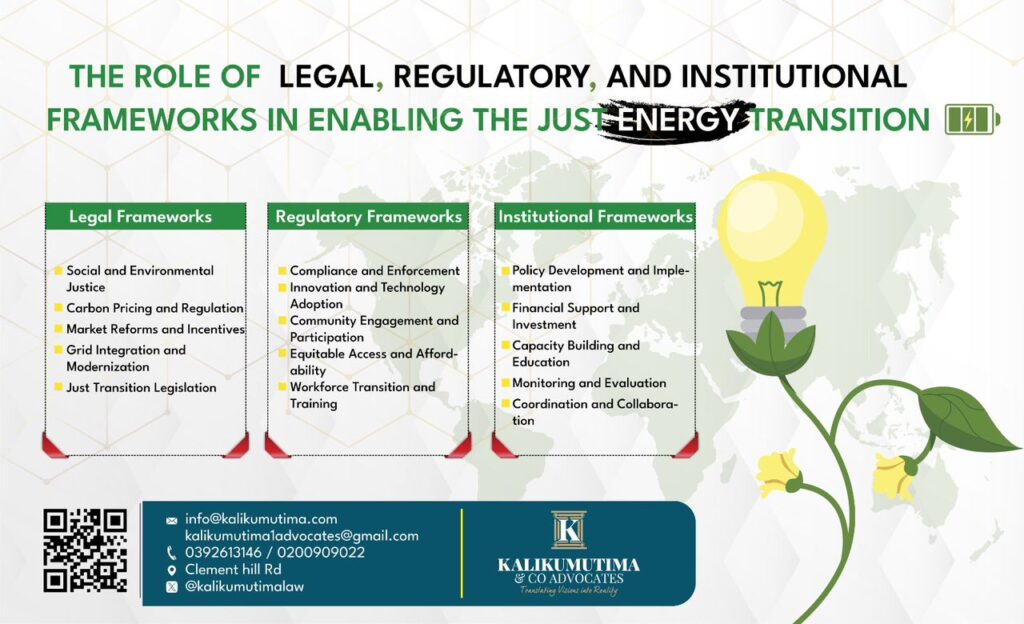
- Legal frameworks
a. Social and Environmental Justice
The just energy transition must prioritize social and environmental justice to avoid exacerbating existing inequalities. Legal frameworks can mandate community engagement in energy project planning and implementation, giving local communities a voice in decision-making processes. Environmental standards must be categorically established and strictly enforced to mitigate potential negative impacts associated with the transition, ensuring that the benefits are distributed equitably.
b. Setting Renewable Energy Targets
Legal frameworks can and do empower governments to set ambitious renewable energy targets. By enacting laws that mandate a specific percentage of energy generation from renewable sources, policymakers create a conducive regulatory environment that encourages the development and adoption of clean energy technologies. These targets provide a roadmap for the transition, signaling a commitment to reducing carbon emissions and promoting sustainability.
c. Carbon Pricing and Regulation
Introducing carbon pricing mechanisms through legislation is a potent tool to internalize the external costs of carbon emissions. Legal frameworks can establish carbon taxes or cap-and-trade systems thereby incentivizing businesses to reduce their carbon footprint and transition towards low-carbon alternatives. Such legal frameworks provide economic signals that encourage the adoption of cleaner technologies.
d. Grid Integration and Modernization
Legal frameworks govern the integration of renewable energy into existing power grids. Laws may be enacted to ensure the seamless connection of renewable energy sources, updating grid codes and standards to accommodate the intermittent nature of sources like wind and solar. Legal provisions can also support grid modernization efforts, enhancing the flexibility and resilience of the existent power infrastructure.
e. Market Reforms and Incentives
Legal frameworks play a critical role in shaping market dynamics to favor renewable energy deployment. This includes the removal of subsidies for fossil fuels thereby creating a leveled playing field for clean energy technologies. Incentives such as feed-in tariffs, tax credits, and other financial mechanisms are often established through legislation to support and promote the growth of renewable energy industries.
f. Community Engagement and Environmental Protection
Legal frameworks ensure the active involvement of local communities in the decision-making processes related to energy projects. Laws may mandate public consultations and require the consideration of community concerns in project planning. Additionally, environmental protection laws set standards for the sustainable development of energy projects thereby mitigating potential negative impacts on ecosystems and biodiversity.
g. Just Transition Legislation
Cognizant of the social and economic implications of the energy transition, legal frameworks can incorporate just transition provisions. This may involve the development and implementation of laws that address the needs of workers in declining industries, providing support for job retraining, economic diversification, and social safety nets for affected communities.
h. International Cooperation and Agreements
Legal frameworks extend to international cooperation through agreements and treaties. Nations can collaborate along legal frameworks that promote the exchange of clean energy technologies, facilitate investments in sustainable projects, and establish common standards for emissions reductions. International legal mechanisms can create a cohesive global effort towards a just energy transition.
- Regulatory Frameworks
a. Equitable Access and Affordability
i) Tariff Structures: Regulatory frameworks can establish fair and transparent tariff structures that ensure affordable access to clean energy for all demographics of society, including vulnerable and low-income communities.
ii) Subsidies and Incentives: Regulators can design subsidy programs or financial incentives to make clean energy technologies more affordable and accessible, particularly in underserved communities.
b. Community Engagement and Participation.
i) Stakeholder Involvement: Regulatory frameworks can mandate the active involvement of communities, NGOs, and other stakeholders in decision-making processes related to energy projects. This ensures that the concerns, aspirations and interests of local communities are considered.
ii) Local Ownership: Regulations can promote local ownership of renewable energy projects thereby fostering economic development and job creation within communities.
c. Workforce Transition and Training.
i) Labour Standards: Regulatory frameworks can establish labour standards that ensure a just transition for workers in traditional energy sectors, providing retraining programs and support for those affected by the shift.
ii) Job Creation: Regulations can incentivize the development of renewable energy projects that contribute to job creation, particularly in regions that have traditionally relied on fossil fuel industries. The incentives could range from tax rebates, access to land and streamlined access to cluster finance.
d. Environmental Justice.
i) Emission Standards: Regulatory bodies can set stringent emission standards for energy projects, ensuring that the transition to cleaner sources mitigates climate change and doesn’t disproportionately affect marginalized communities.
ii) Land Use Regulations: Guidelines can be established to prevent the negative environmental and social impacts of energy projects, such as deforestation or displacement of communities.
e. Innovation and Technology Adoption.
i) R&D Incentives: Regulatory frameworks can provide incentives for research and development in clean energy technologies, encouraging innovation and the deployment of advanced solutions.
ii) Technology Standards: Regulations can set standards for the adoption of cleaner and more efficient energy technologies thereby driving the industry towards sustainable practices.
f. Grid Integration and Infrastructure Development:
i) Interconnection Standards: Regulatory bodies can establish standards for the integration of renewable energy sources into the existing grid thereby ensuring a smooth transition and a reliable energy supply.
ii) Infrastructure Investment: Regulations can promote investment in energy infrastructure, prioritizing projects that enhance grid reliability and support the integration of renewable energy in the national energy mix.
g. Compliance and Enforcement:
Regulatory frameworks play a critical role in monitoring compliance with environmental and social standards. Enforcement mechanisms can include penalties for non-compliance to ensure that the transition remains just and responsible.
- Institutional Support
a. Policy Development and Implementation:
i) Strategic Planning: Institutions are responsible for developing comprehensive energy policies that outline goals, targets, and strategies for a just transition. These policies can address environmental sustainability, social equity, and economic development.
ii) Regulatory Frameworks: Institutions create and enforce regulatory frameworks that set the rules and standards for the energy sector, ensuring a level playing field and guiding the transition towards just outcomes.
b. Financial Support and Investment.
i) Funding Programs: Institutions can establish funding programs to support research, development, and deployment of clean energy technologies. This financial support can also be directed towards projects that benefit marginalized communities and promote social equity.
ii) Incentives and Subsidies: Financial incentives, such as tax credits or subsidies, can be provided to businesses and individuals involved in the adoption of renewable energy technologies, making them more economically viable.
c. Capacity Building and Education.
i) Training Programs: Institutions can develop and implement training programs to build the skills and knowledge required for the renewable energy sector. This includes workforce development initiatives to ensure a just transition for workers in traditional energy industries.
ii) Public Awareness: Institutions play a role in raising public awareness about the benefits of clean energy and the importance of a just transition. This can involve educational campaigns and outreach programs.
d. Research and Development.
i) Innovation Hubs: Institutions can establish research and development centers focused on clean energy technologies. These hubs can facilitate collaboration between researchers, industry, and government, fostering innovation and the advancement of sustainable energy solutions.
ii) Technology Assessment: Institutions can assess the feasibility and impacts of emerging technologies thereby helping guide investment decisions and policy development.
e. International Collaboration.
Partnerships and Agreements: Institutions can engage in international collaborations, forming partnerships and agreements to share knowledge, technology, and best practices. This facilitates a coordinated global effort toward a just energy transition.
f) Community Engagement.
i) Community Programs: Institutions can support community engagement initiatives, ensuring that local communities are actively involved in decision-making processes related to energy projects. This includes measures to address the specific needs and concerns of affected communities.
ii) Social Impact Assessments: Institutions can mandate social impact assessments for energy projects, evaluating their potential effects on communities and taking steps to minimize negative impacts.
g) Monitoring and Evaluation.
Performance Metrics: Institutions establish metrics and indicators to monitor the progress of the just energy transition. Regular evaluations help assess the effectiveness of policies and initiatives, allowing for adjustments and improvements over time.
h) Coordination and Collaboration.
Inter-agency Collaboration: Different institutions at various levels of government need to collaborate to ensure a coordinated and coherent approach to the energy transition. This includes coordination between energy, environmental, and social welfare agencies.
Conclusion
By and large, the role of legal, regulatory, and institutional frameworks in enabling a just energy transition cannot be overemphasized. These frameworks provide the essential structure, guidance, and support needed to navigate the complexities of a transition to a more sustainable and equitable energy future. Through thoughtful legislation, effective regulation, institutional support, and a commitment to social and environmental justice, nations can pave the way for a just energy transition that benefits both current and future generations. As we navigate the challenges of climate change, these frameworks become indispensable tools in shaping a world powered by clean, just, and sustainable energy.
ENERGY, ENVIRONMENT & SUSTAINABILITY DEPARTMENT